Home

Showing posts with label Artist Talks. Show all posts

Monday, 10 June 2019

09.06.2019
Today I took a visit into Manchester to see their Metropolitan University’s degree exhibition ‘Everything starts from something’. I was really looking forward to see how a popular city’s University competes with my own, and gain some ideas and inspiration for my degree show this time next year. 
MMU had buildings with multiple sections for BA degrees in their School of Art such as Sculpture, Fine Art, Media, Photography but also more specified subjects such as Interactive Art. I was pleasantly surprised with just how big the exhibition was and how much exhibiting space they have access to. It was a really interesting mixed media contemporary exhibition, with some pieces obviously more successful than others. I was expecting to see the work presented and become overwhelmed with a daunting feeling of how unprepared for this stage I am, but instead was excited and thought I stand on a similar level to these artists and works. It hasn’t lead to any inspired ideas as yet, but it has reassured me that I can produce a final show that is as exciting and as ambitious as I hoped. 
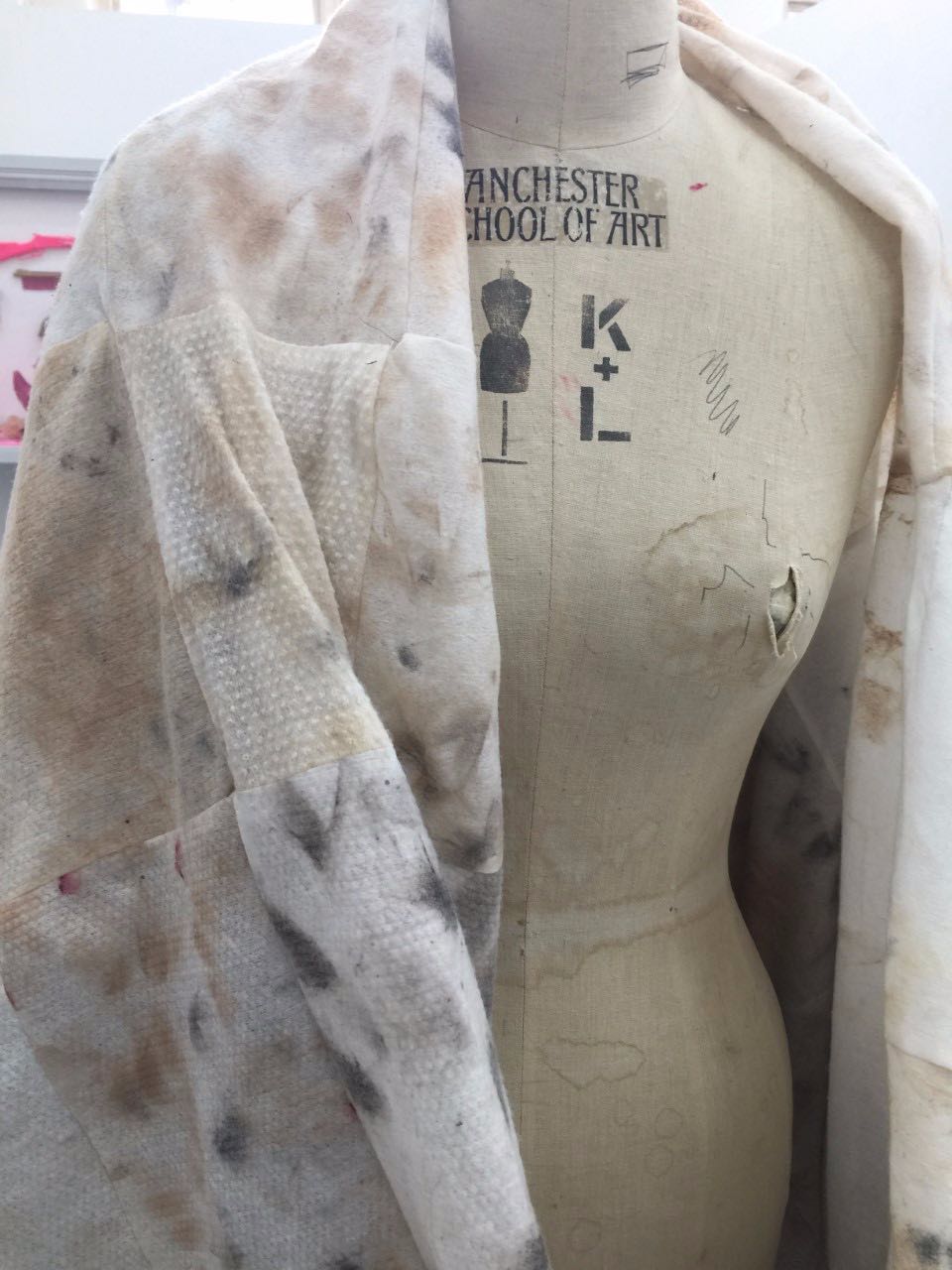
A few works that stood out for me would be this make up wipe cape/blanket. The concept jumping right out at you for makeup being a safety blanket for so many girls. Something we tend to hide behind and cover up all our insecurities with. 

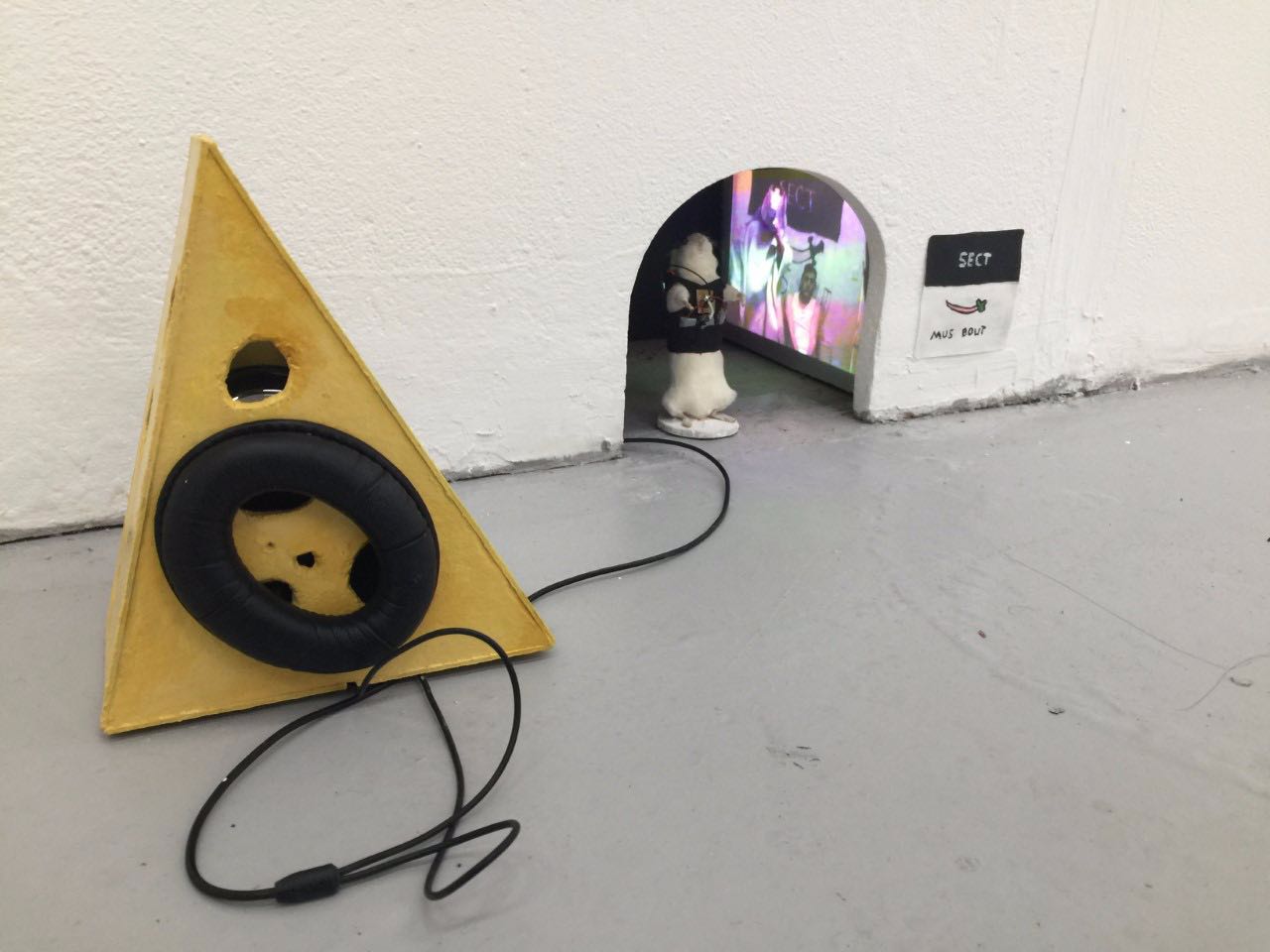
I also loved the political taxidermy mouse group with what appeared to be suicide bomb vests on. The artist had made mouse doors into the wall with taxidermy mice with vests plotted throughout, along with a small projection playing inside complete with sound. As the mice were life size and the exhibit was relative to the mice, you had to get on your hands and knees to be able to hear or see the projection. 


I also found amongst the photography section, a display focusing on the effects of and companies/products that use the ingredient of palm oil. This was a really well thought out piece as the wallpaper used was a selection of products that use the substance, and in a glass museum-like display cabinet held the products. On one side you looked through the cabinet face on at the products and labels, and as you walked round you could see the list of ingredients on the back. A really effective and powerful exhibit, along with a handout that has information about palm oil, the effect it has on our environment and the products and substance names so that you can check items in the future. Having an informative hand out that the audience can take with them and learn from is similar to what I tried to do with ‘Pollushie, Is It Worth It?’, so it was great to see others doing the same on topics that are in need of conversation. 


After seeing the whole of the exhibition, I was impressed with most of the content, but the sloppy finishing touches of the exhibition throughout distracted immensely from the work. At my University, the lecturers and tutors are very picky about minute touches like small marks on walls or making sure supporting elements are painted the right colour, whether that be to make them unnoticeable or to become part of the work, touch ups like that. Well, walking around that exhibition the tutors and students obviously don’t take as much care as we do. It felt messy and sloppy and distracted the viewer and audience from the work displayed to wires hanging out or wood and floor not painted at all or properly. 


Now I have seen first hand what a difference care to details makes, I will double check my future work and installations with a fine tooth comb. 


Wednesday, 17 April 2019

17.04.2019
Mary Ellen Croteau is a fine artist who uses plastic bottle tops to create portraits and artworks. Mary's work asks what should we do with all the plastic waste we are creating? "It is made from petroleum. It doesn't compost or decompose. And what little is recycled creates it's own pollution. So I make art with this waste". Mary has produced multiple wall-based installation using plastic bottle tops, her self portrait 'CLOSE' took over 7000 bottle tops which were collected over the period of 2 years. 
With 'CLOSE' being a self portrait, and the bottle tops being personally collected from products that have either been her own or those around her, this is another form of collecting personal data. A personal reflection of Mary's consumer history of the two years.
Seeing Mary's work helped me with understanding how to create more detail and depth by placing bottle tops within bottle tops. By using this as a technique it allows you to blend colours and create a smooth transition and balance between colours. It also adds more interest and makes it more technically impressive.  
Mary's bottle top artworks aim to bring light to the amount of single use plastics we use, excessive packaging from products and the danger of our throw away culture. It was very helpful to see how  Mary uses bottle tops in a fine art context as most of the other research I collected on how others manipulate the material were more on a craft level. 


Saturday, 13 April 2019

13.04.2019 
As a Greenpeace supporter/donator I received an invite to join in on the weekend of tours at The South Quay docks in London, to have a tour of their ship Esperanza. I was very excited about this opportunity to talk to Greenpeace campaigners myself, and check out the vessel they use for expeditions such as chasing ships with illegal cargo like timber from the amazon, or collecting research on the polar bears in the arctic. From the tour I found out that the ship can spend up to 60 days at sea at a time without docking, and the crew usually spends 3 months on 3 months off. 
At the end of the tour one of the campaigners met us and gave us a run down of where the ship is going next and what the latest campaign is. The ship on Monday is leaving London and making its way to the North Pole. Here it is embarking on a 12 month journey where it will visit desperate parts of our oceans that are in danger in many different ways. This journey will form research and spread the word about 30x30. Greenpeace is currently working towards securing a global ocean treaty that would protect 30% of the worlds oceans by 2030. This is a necessity for the health of our oceans and the animals within it, and a hopeful step for the future. 
It was inspiring to hear about the dedication and work everyone at Greenpeace is achieving or working towards. It has given me a new determination to really use my work within our end of year exhibition, Amalgamation and the artwork for the Students Union, to spread awareness about plastic pollution within our oceans and plant the distressing images of suffering that are the animals reality. 


Tuesday, 2 April 2019

02.04.2019
This semester I have mostly looked at two artists, Mella Shaw and Mark Dion. 
Mella Shaw is a British artist who was featured at the Collect Open, Saatchi Gallery in 2018, and is now currently on a nationwide tour with her work, Harvest. Harvest is an installation in response to the statistic that by 2050, there will be a greater weight of plastic in the oceans than fish. This large scale installation includes hundreds of detailed press moulded and slip cast clay 'plastic' bottles, containers and fish, as Mella aims to search for practical solutions to our desperate situation. 
I took interest to her work as she too is tackling plastic pollution within our oceans through sculpture, but I also found the link to material and context fascinating. Clay is generally heavier compared to light weight plastic, and is natural in contrast to the man-made material. By using a heavier material, she is exaggerating the weight of the situation whilst not adding to the problem by creating more plastic. This is a detail you wouldn't necessarily realise until you researched into the work more. The idea of searching for information within the work intrigues me as it proves the facts are out there if we choose to listen/find them. We have lived off an out of sight out of mind ethic towards plastic and waste for decades, and that level of wilful ignorance needs to change. We all need to be researching and seeing for ourselves the detrimental effects of plastic as a material when it comes in contact with our environment and wildlife. This is a trait I wanted to transfer into my work with using polymer clay and plastic based materials for my sculptures.
It was really helpful to look into Mella's work as she is tackling the same issues and topics within her practice as mine, and is very much a current working artist. This was great to see the journey of her work, where its being displayed and how, and inspiring to see how artwork can impact the way people consider plastic consumption within their household.   


Mark Dion has also been a great influence. He is a conceptual artist widely known for his scientific presentations within his installations. I was looking more specifically into his 1999-2000 work, Landfill. The calculated chaos of the work and how it looks gradually built up from time, gives this sense of a natural accumulation. But natural feels like the wrong word as it's anything but. The mixture of plastic and waste is used as a record, where information collected are the consequences from life itself. The natural record of life should be the birds on branches or surrounding environment, instead of the rubbish we're leaving behind. As Mark has used a closed diorama, the space feels very claustrophobic and triggers an uncomfortable and desperate response. It feels as if you're looking through a window to another world or another reality. I think this creates some distance from our world and this imagined space (which isn't really imagined at all), instead of making the audience feel involved and also consumed. This piece is interesting though as it feels timeless, it could be about the past, present or future, and speaks a general warning about the destruction we're leaving behind, and the unhealthy relationship between humans and our environment. 
Mark Dion has been a great help for researching into successful installations, as I had never made a scene for myself before. He has an art for occupying a space without over filling it or not including enough elements. As his work tends to be based on factual and scientific messages, he translates this information into an immersive and inquisitive experience. Similar to what Mella did with material, Mark is answering most questions but allowing the audience to inquire themselves, what the work is about. Leaving room for exploring is vital to Marks work as its all about finding truth and encouraging change. This is a technique I ultimately used through my staged shop, PolluShine. 


Sunday, 10 March 2019

07.03.2019
Thursday we had a visit from artist Jasleen Kaur who's work focus's on identity politics and structural inequalities. Jasleen's practice is informed from inherited issues, a result of race or culture, whilst exploring personal histories of herself or others around her. 
Asking what is culture, and who benefits from cultural production? 
Jasleen explained that the word culture originates from agriculture, a word of hard work and labour. Culture is the everyday woman in her kitchen making a meal for her family that's been passed down from tradition, not necessarily an exhibit in the V&A that's labelled so. Culture is something people work at and try to keep alive. 
Jasleen went on to discuss a project she completed in 2010 where she wanted to transform the statue of Robert Napier, who fought in the first and second Anglo-Sikh war, by putting a turban over his helmet. As she was having trouble with getting permissions from the council and needed permission from the family, the direction of her work was took off course. She contacted the grandson of Robert Napier and instead of putting the turban on the statue, she asked if she could put one on himself. By wanting to tackle the power wealth empire of the men in statues in our cities, this had taken her to a direct descendent of someone who was of different ethnicities and cultures, but together, shared a piece of history. This turned into a more socially engaged practice and I would say a more successful one. They were able to share this intimate experience of her dad building the turban whilst they discussed their connections and the consequences of the war. 


I found this whole process fascinating and reassuring that even when something isn't going quite to plan, there's always an opportunity to create something remarkable. 

Friday, 22 February 2019

21.02.2019
Antonio Roberts was next on our visiting artist programme and he is actually a past student/graduate from our university. Now being a digital artist, art made with error and coding, a very unique form of artwork. Coding to me feels very matter of fact and restricting. Each formula or sequence will work in a specific way and nothing else, emotionless and predictable. But Antonio proved that it doesn't have to be predictable at all. As he showed us a few one minute clips of the videos he has produced (a mere snippet of the full length videos), they were anything but.
Antonio explained a fascination with copyright and how it's almost been lost in this digital age. Reposting photos or videos on facebook, sending them in text messages or adding captions to create 'MEMEs' are just some ways you could be in violation of the copyright laws. For example if Youtube channels/videos use another video clip, they tend to add "no copyright infringement intended" thinking it allows them use of the video/clip, when actually you're still acting against the law. Copyright laws are dated and in some ways no longer relevant because of these reasons, so does copyright still exist? The answer seems to be only when someone with enough money and/or lawyers chooses to enforce their rights to said image/video etc. Antonio agrees that there needs to be an appropriation of using other peoples work (or image) but should not be ruled out completely. Adaptations and versions of past work happens constantly. It would be very rare if not impossible to come up with an idea completely new which hasn't already been done in some way. We should instead be using and encouraging each other in our creativity inquest. Antonio explained he believes real creativity is taking something that's been done and making it your own. He encouraged us to ask ourself in the future, why am I using this image and is it appropriate/ethical to be used? But also question who is allowed to appropriate culture? Who decides one thing is okay compared to another?
It was really inspiring to see a past student of my university established in his practice, and has opened my eyes to the world of glitch art.

https://www.hellocatfood.com
14.02.2019
Rosalie Schweiker came to our university for the visiting artist programme this semester and gave a really interesting twist on a lecture. She explained she used to have a copy of  'The Little Red School Book' and how it used to educate teenagers on topics you might not have found in school, such as sex and drugs. In the 1970's you didn't have the internet, a go to place for answers to questions that might've been too uncomfortable to ask aloud. So some people were getting themselves into situations they weren't prepared for, or could in some cases, become dangerous. The book at the time was seen as outrageous, but as Rosalie explained, was a safety net for many of its readers. This idea of having a backup plan and a point of call for information right inside your pocket was a comforting precaution. Which lead Rosalie to develop this idea into something we could use in the present. As sex and drugs aren't that much of a hot topic anymore and we're able to find answers to our questions on search engines such as google, the path of her book lead down another direction. Rosalie explained that she rarely sells her work but still earns as a working artist. She spends a lot of her time presenting lectures or talks, or with workshops and lessons in schools. Which the idea then became a book by Rosalie and Mirjam Bayerdorfer 'Teaching   for people who prefer not to teach'.
A magic 8 ball of learning, each page reveals a different answer, an activity or discussion to be had. This can be chosen by the teacher or as Rosalie said is intended, by the class themselves. This is a fun and exciting way to teach and learn as the power of the classroom is disrupted and handed back to the students.
As the books were handed out for us to have a read it was clear this was the direction of the lecture today also. Our lecture was to be exploring Rosalie's calendar for this month (as she picked from the book) and we spent the hour finding out what it's really like to be a working artist. As she spoke about her month of current projects to yoga class I found it a very useful incite into how you need to stay organised and network yourself all the time. There are opportunities everywhere and creating this publication was just one that allows Rosalie's work to travel, and reach a wider audience.

http://rosalieschweiker.info/come-along/

Thursday, 17 January 2019

15.01.2019
After having a meeting with AirSpace's curator Glen on the 10th, I was able to really home in on what I wanted to say in my exhibit and get an idea of past window exhibitions to see how mine would compare.
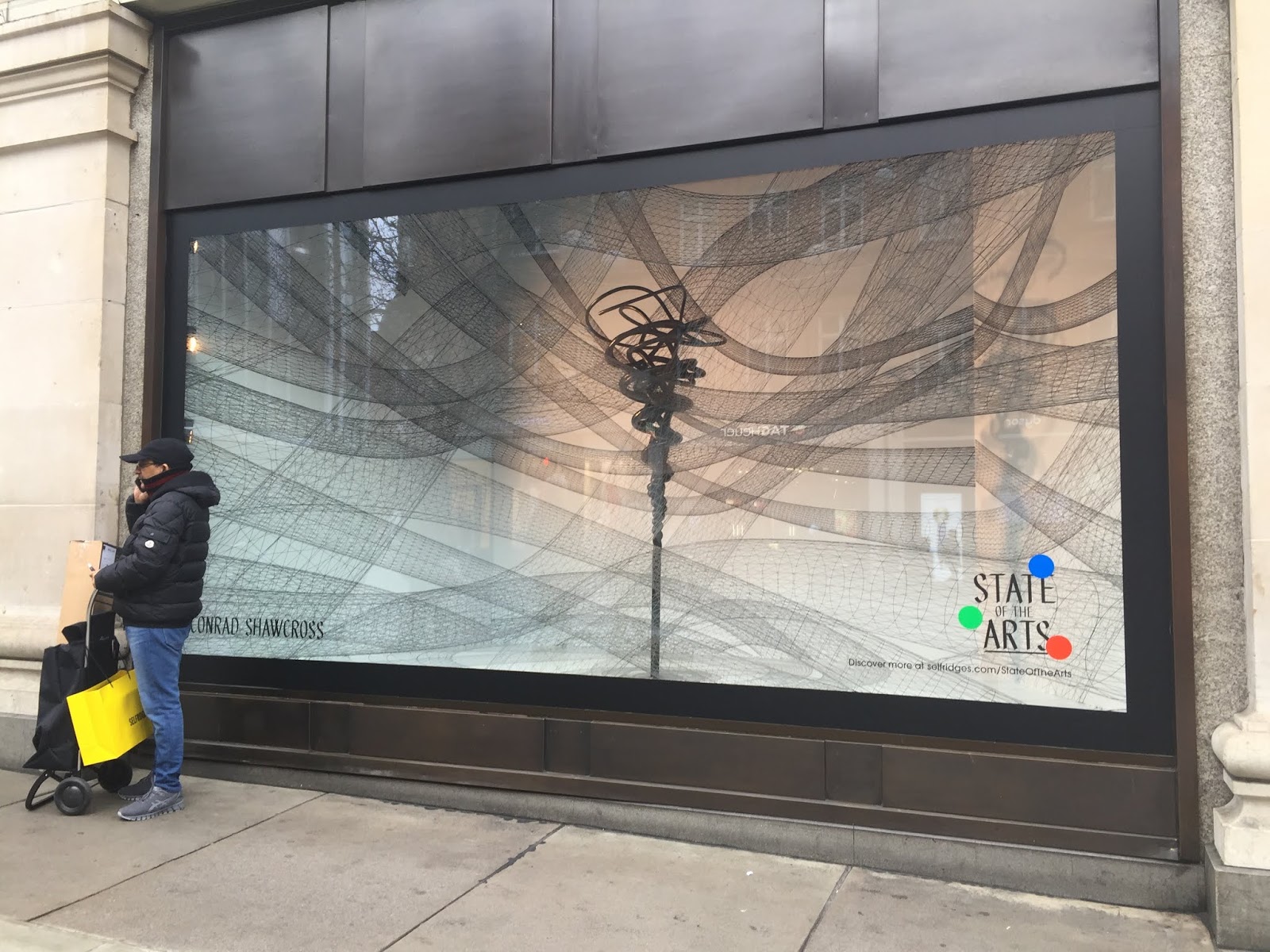
I had seen on the Selfridges website that they were engaging in a creative campaign, State of The Arts, bringing art to unexpected places. From my last visit to Selfridges I was able to delve into their window displays for Christmas and I was excited to now see window displays that directly link to my vision.
Featuring art in their Oxford Street windows is a fantastic way to bring public art to a community, but also brings an exciting new way to experience art. This helps making it more accessible and broadens the audience you will reach, including some who may not normally visit galleries or experience art in a more traditional way. It also changes the way the art is viewed and the relationship with the viewer. Simon Periton explains that "The work will be experienced in glimpses and that's where a public artwork is different to putting a piece in a gallery". When visiting a gallery you expect to spend at least a few hours (potentially a whole day), spending time examining the art and reading the different emotions it gives you, where if you're riding the bus or walking past you really do have seconds. This creates a certain pressure and responsibility for the artist to grab the viewers attention as quick as they can and hold it for as long as they can. This grab and go, fast food style of exhibiting is new and exiting but also challenging.
Collaborating with some of the UK's leading galleries and critically acclaimed artists they have also created a 'corner shop' inside where you can buy a sculpture or painting as if it is a bag of crisps and a can of lemonade. I was shocked to see some of Jeff Koons' small balloon animals on sale amongst sketchbooks and pencils as if it belonged there.
Cass Art have also teamed up in the 'corner shop' where they are selling artist tools and mediums that customers can take home and try themselves, also putting on daily workshops or talks at 14:00 where anyone can join and get creative or involved with important conversations about the world of art. Again, this is opening up the (what sometimes feels closed) community of artists and art lovers showing that all is welcome, from established artists to someone walking by who just wanted to join in.
Although the work in the window was in a very different space to a gallery setting, they still had the same white cube feel with crisp white walls, feeling very clinical. It was great for me to see a similar use of a shop style scene but to also get some ideas on how I would do it differently.

http://selfridges.com/GB/en/features/articles/selfridges-guideto/state-of-the-arts


Tuesday, 18 December 2018

18.12.2018
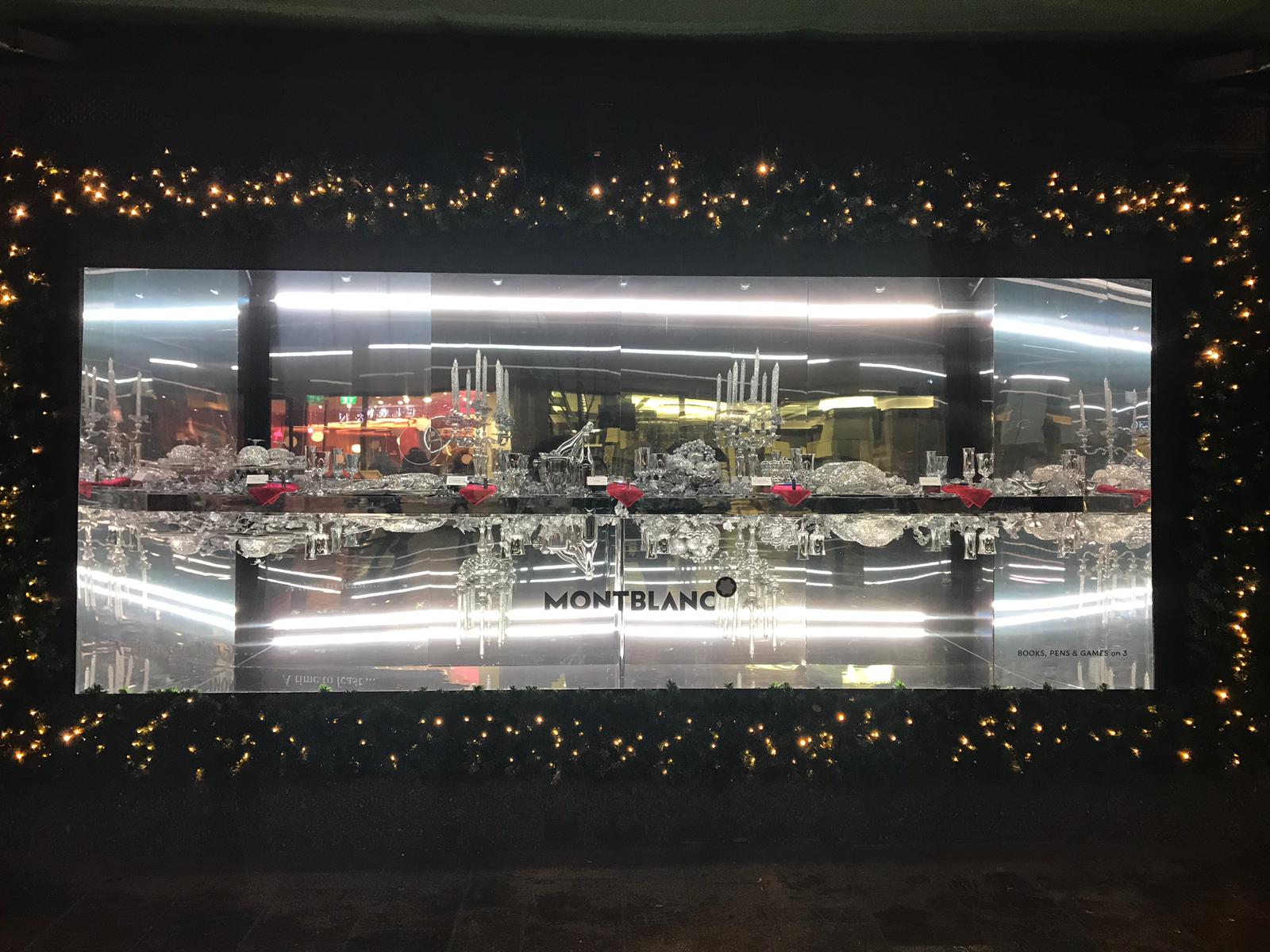
From spending a day helping Claybody theatre I wanted to see if I could arrange with the support and help from Airspace Gallery, a way to stage my own scene and set using their window exhibition programme. After speaking with the director Glen and preparing a proposal for how I would use the time and space, we have set to meet in the new year to discuss further my ideas and hopes for the project. My proposal featured an idea to create a shopfront called 'PolluShine - is it worth it?' focusing on the detrimental effects of pollution within our oceans. For inspiration and ideas on construction and application, I took a trip into London to see how high end shops such as Harrods, Selfridges, John Lewis and House Of Fraser treat their shop fronts and stores within the busiest and most competitive time of the year, Christmas. I was completely awe-struck with how elaborate and exciting these windows were. I felt transformed to another world studying every detail and consideration, almost forgetting that I was standing outside in the rain. Creating a fantasy that's equally believable than it is imagined is creating a new possibility for the audience. A magical modification of the world we know and live in. This has propelled me with fresh ideas and thoughts on use of lighting, movement and curatorial considerations to take in order to fill the space and command attention.


06.10.19 As I received an email from Curatorspace.com that my proposal had been accepted on the morning of Thursday 26th Sept, it only ga...