Home

Tuesday, 7 May 2019

03.05 - 05.05.2019 Amalgamation
'Pollution Debris', polymer clay sculptures, fish hooks and found consumables. 

This installation aims to highlight how barbaric and damaging the human race are being to marine life and surrounding species through pollution debris in our oceans. Less than 20% of all plastic is recycled globally, with 40% of plastic produced being single use packaging (National Geographic, 2018).
An estimated 640,000 tonnes of nylon ghost nets, lines and          discarded fishing gear is abandoned in our oceans each year; ensnaring, maiming, drowning or simply starving hundreds of thousands (World Animal Protection 2014).

This installation is a call to arms, recognising the need to work together to create change. Each sculpture represents a real circumstance, a painful reminder of the destruction we are leaving behind. 


Monday, 6 May 2019

06.05.2019
Back in February as part of Green Week at Staffordshire University, our Students Union held a design competition using a short brief that was sent out to the School of Creative Arts and Engineering students. The brief explained the design will be printed onto tote bags and sold in the Union shops, encouraging students to use reusable canvas bags instead of plastic. 
The theme was love your planet, and the design could be anything from a comic strip, to a pattern or pun, but had to be no bigger than 250mm x 250mm. The closing date was 15th February, and I entered 3 designs. 
Out of these 3 designs, 2 were chosen within the final 6, and were to be voted on via Facebook likes. The design with the most likes would have the opportunity to have their design printed on 100 bags and sold, and this was an opportunity I didn't want to miss! As this semester I have been focusing on plastic pollution and the impact human behaviour is having on the environment, this was another opportunity to raise awareness and reduce the amount of plastic being produced/sold on campus.


The deadline for voting was up and the competition was complete. I won First and Third place. This was a fantastic achievement as I had never ventured into design before and can't wait to see my design printed and sold. The winning design (say no to plastics) received a total of 68 likes/votes, and the third place design (save your 10p), 23. 
I am still currently waiting for the design to be printed and put in shops, but I am looking forward to having my design mass produced and commercially sold. Being able to purchase my first professionally printed design is another great opportunity I was able to gain this semester. 

https://www.facebook.com/staffsunion/photos/a.10156124214717548/10156124214782548/?type=3&theater

https://www.facebook.com/staffsunion/photos/a.10156124214717548/10156124214982548/?type=3&theater


Sunday, 5 May 2019

04.05.2019
Since emailing the photograph of the bottle tops mural to the students union for printing, some issues and confusion with payment had arose. Because of this, now the printed board couldn't be up by Friday 3rd May. This was disappointing as I had family coming to the end of year exhibition, Amalgamation, and would've been great to share the success with them, but a minor set back at that. With the help of Anna, one of my lecturers, the project has been put back on track and the order has been placed. We are now hoping to use the Degree show as the opening instead. 
There were also some re-arranging of dates for the workshops with the nurseries, as we are now hoping to get an early years education student to put together a lesson/workshop plan for the day. Pushing it back to Wednesday 29th May, a day in the middle of half term for schools, also coinciding with the National Children's Gardening Week event outside the Students Union. This will hopefully lead to a really fun and exciting day of activities with the kids, teaching them important lessons about the fragility of our ecosystem.
As the public printed artwork wasn't ordered in time, I was glad I had brought the piece back with me to be in the exhibition, as we could still present the work to the public in a different form. We had found room In the exhibition in the front hallway and gave the public a bright and colourful artwork to be greeted by. 
I had brought in the bottle tops mural on Tuesday in the afternoon, and on Wednesday morning I used the assistance of artist David Bethell for the install. As the bottle tops varied in size and height, flipping it on its front to drill the two boards together would've caused damage to the work. So to reduce the breakage of bottle tops we used two tables, slightly separated. Once the two boards were connected we made measured markings on the wall in the hallway so that the mural would sit in the middle. As the wall panels weren't strong enough, we had to attach the mural to the vertical wooden joists, to insure that the boards would be secure. To do this without any screws on show, we measured the distance from the edge of the board to where the joists would sit, and removed plastic bottle tops vertically along the line. After then getting help from 4-5 other students, and glueing the bottle tops that had been taken/ fallen off, the tricky and fiddly install was complete.


I was overall pleased with the positioning of the board, but as only one light in the hallway was working sufficiently; it was quite dark and poorly lit. To improve the end result of this work, I should have sourced/brought in some external lighting, to help accentuate  the colours and details within the piece. 


The feedback I had received throughout the night, but also during install and setting up was beyond positive. Everyone loved the colours, and was impressed by the different tones and shadings I had achieved, whilst also reflecting on the important message of the work behind it. Picking up key themes of plastic pollution, tsunamis, climate change, and recognising Hokusai's The Great Wave as well. Overall I am very pleased with the outcome of this project, and although there was a delay in the printing and installing of the permanent board, I am pleased that it was out of my hands, and I still reached my personal deadline in time. I am still looking forward to the opening at the Degree show, and will start to gather some more ideas for activities for the workshops.

Saturday, 4 May 2019

04.05.2019
Now being the day after the opening of Amalgamation, I can reflect on the week, and review how successful my installation was/went. 
On Monday I begun by bringing the work into the space and measuring sizes for the plinth for my 'turtle nose stud' sculpture. Once I was happy with the measurements I got the wood cut to size, and glued/taped it together. I was painting my plinths a rich blue, and completed my tasks by 3pm. I then was able to arrange my installation in the way as described in my proposal. 


Once the work was set out in the way I had intended, I realised it didn't quite work with the space. The exhibiting room I was in has a wall to the left of my installation, a door on the same wall to the right, and a wall sized window on the right (according to the image below). As the sculptures were front facing, this meant they were facing away from the door and window, meaning the viewer would have to be in a particular position to observe the work fully, making it awkward for viewing. 
It also felt pushed up against the wall. I was in a room with wall based work, paintings, and after a peer pointing this out, I realised I had an opportunity to occupy more space than I was using. 


Now Tuesday, I decided to completely mix up what I had originally planned. I had started by moving the plinths into the middle of the room to see roughly what it would look like in the middle. Straight away this arose issues with how you could view the paintings on the other walls. As the artist I was sharing the room with had multiple paintings making up a grid, it encouraged the way you view it to step back and have some distance from the paintings. By having the plinths in the middle it was restricting the viewing of this work, and overlapped/blocked them when from a distance. I had to think of another way I could use space, whilst not interfering with the other artists paintings. 
After negotiating a space swap with the other artist in the room, this gave me a cornered space which would fit better for what I now envisioned. 
I had then experimented with different compositions and decided on using the plinths/sculptures to create a symmetrical line in ascending order of height, similar to the lines and curves of a wave. I was happy with this decision as it is quite minimal yet pleasing on the eye. 


As I had now changed the spacing with my sculptures, I could no longer use the net as it was, in the way I had wanted to, so begun testing out different ways I could use it. 
Using pins I then hung the net on the wall. Although I thought it was effective in making the viewer/sculptures feel so small and consumed in comparison, it felt very fussily placed rather than a more natural swept feel I was after. So on Wednesday I removed the net and started again, now having the net protruding from the floor. This still didn't feel right to me so I took a break and painted the square on the floor for my penguin to sit in. 


I then sought out advice from my peers on other ways I could display the net that doesn't overlap into the 'seagull raincoat' sculpture's space, and potentially away from the wall as I wanted to have the viewer see the net as a physical, heavy sculptural object, rather than a more two dimensional form.
After getting some suggestions, I decided I wanted to keep the net in a similar state to how it would wash up on shore, or be tangled within the ocean. I wanted to have the net half hanging from fishing line, with the rest gathered and touching the floor. This proved difficult as the ceiling in the room is roughly double the height of a standard building ceiling, meaning it was unreachable to suspend something from. With the help of another artist on Thursday, we were able to use nails to attach fishing line from one wall to the opposite, which allowed us to then attach and suspend the net from the line. This was a perfect solution to the problem as it was hardly visible and allowed me to suspend the net away from the wall and make it look free standing. 


I am still really pleased with the impact the net creates as the height of the object is around 5 foot, giving an intimidating and overpowering feeling, and creates a really heavy and bulky impression to the net. I also added small details like sewing on fish hooks in different sizes, intertwined within the net. 


Overall it has been a tough week full of decision making and trial and error, but has been extremely rewarding. I am really happy with the final composition of the installation, and although it has been stressful at times, have really enjoyed making the most out of the space and sculptures. 


Tuesday, 30 April 2019

28.04.2019
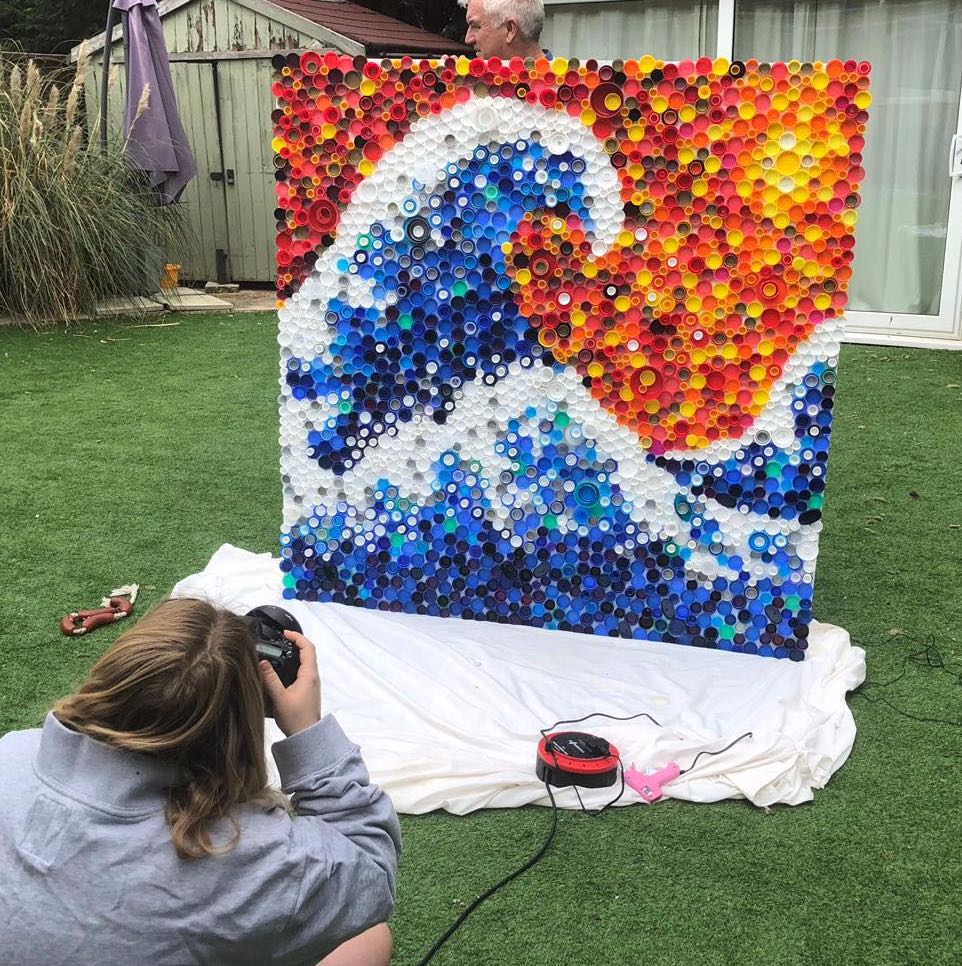
As I was making progress on the bottle tops mural for the Students Union, it was clear I was running out of different colours and tones. After collecting from the Union but also neighbours, family and friends, I had to think about different ways I could accumulate quantities of plastic bottle tops. I had found a local manufacturer that donated 100 whites and 100 oranges, but I still needed hundreds of warm tones and whites. I then found on eBay there was a small market for selling used plastic bottle tops for craft projects, so I was able to purchase hundreds of different sizes and colours. This really saved the project as I was working to a strict deadline for the work to be photographed and finished during easter, so that the mural can be printed and installed for the opening on Friday 3rd May. 
Whilst the bottle tops were arriving throughout the week I managed to finish the wave, going through one by one attaching them to the wooden board. I removed all the reds so that I could stand the work up and get a better view of the piece. Once I was satisfied with the blue tones I placed it back onto the table I was working on, and begun the background and placement of whites and silvers.


The long process of getting the different colour and size bottle tops placed on the board was complete, and I then had to go through and individually glue them to the wooden board. Once all the bottle tops were secured, I was able to stand the work up and check over the colour distribution. I was able to then remove and shuffle around certain bottle tops and edit the work. 
I am really pleased with the finished composition and transition of colour within the piece, achieved by placing bottle tops within bottle tops. Adding a sunset colour theme to the background gives a strong colour contrast to the wave, making it a very bold and colourful mural. I also have clearly translated Hokusai's, The Great Wave, within the mural whilst making it unique at the same time. 
I had some trouble photographing the piece as the lighting I had was creating too many reflections and shadows within the work, as each bottle top is a different size/height. I decided it was best to bring the mural outside into the natural lighting and used a white sheet to reflect some light.


The final photograph has turned out very crisp and I am pleased with the quality. As the board is 1.5 Metre square, and the print will be 2M square, the image quality is extremely important as it will be enlarged by 25%. I am really looking forward to seeing it installed in the Cadman Courtyard, and hope it is done in time for the reveal at our exhibition Amalgamation on Friday 3rd May. 

Thursday, 18 April 2019

18.04.2019
Today I started my plastic bottle tops mural by sorting all the warm tones into piles of colour and begun with the background. My aim is to create the background similar to a sunset using all the reds and yellows etc.


Once I had separated the colours I then created a central area of yellow, adding oranges and reds as the colours extended outwards. I was really happy with the effect but quickly run out of bottle tops. This is a big issue as I had only managed to cover half of the surface of the background and will need to source some more as soon as possible. 


I then added to the wave and managed to finish all of the blue section. Again I am happy with the different tones achieved and think the work's starting to come together nicely. I am expecting some more white and oranges to arrive after being in contact with a local manufacturer who will be donating 100 of each. Hopefully this will be enough to finish the white foam of the wave, and I will look on eBay to purchase some used plastic bottle tops in warm tones for the background. 


I also received a notification from a lovely post on the Staffs Union Instagram page of an update with images of the piece, and also recognition for the sustainable union tote bag competition I entered and won. It also suggested that I be nominated for this years Proud To Be Staffs Awards which was a lovely sentiment! It has given me an extra boost to make sure the outcome of the piece is everything the Students Union has hoped for, and I'm looking forward to them seeing the final outcome.  

https://www.instagram.com/p/BwZOBpZB31b/


Wednesday, 17 April 2019

17.04.2019
Mary Ellen Croteau is a fine artist who uses plastic bottle tops to create portraits and artworks. Mary's work asks what should we do with all the plastic waste we are creating? "It is made from petroleum. It doesn't compost or decompose. And what little is recycled creates it's own pollution. So I make art with this waste". Mary has produced multiple wall-based installation using plastic bottle tops, her self portrait 'CLOSE' took over 7000 bottle tops which were collected over the period of 2 years. 
With 'CLOSE' being a self portrait, and the bottle tops being personally collected from products that have either been her own or those around her, this is another form of collecting personal data. A personal reflection of Mary's consumer history of the two years.
Seeing Mary's work helped me with understanding how to create more detail and depth by placing bottle tops within bottle tops. By using this as a technique it allows you to blend colours and create a smooth transition and balance between colours. It also adds more interest and makes it more technically impressive.  
Mary's bottle top artworks aim to bring light to the amount of single use plastics we use, excessive packaging from products and the danger of our throw away culture. It was very helpful to see how  Mary uses bottle tops in a fine art context as most of the other research I collected on how others manipulate the material were more on a craft level. 


17.04.2019
For our end of year exhibition, Amalgamation, I will be using the sculptures I have previously used for my exhibition 'PolluShine, Is It Worth It?' at AirSpace Gallery. The sculptures will be consumed by a collage of different nets, ropes and lines. To make this patchwork style net I used both of the fish net dresses I had also previously made, along with a few other nets cut into sections and then laid out to create one combined net that was evenly colour distributed. All the nets used were a mixture of 4 different colours, black, red, blue and white. Once I was happy with the composition of the nets, I hand sewn them together at the seams. As for my exhibit I wanted to have the sculptures poking through above the surface of the nets, I used placement of the nets which already had wear and tear holes, staggering them so that the sculptures would sit through them. 
Once the nets were made into one, I wove the fishing line and ropes  so that they appeared and became tangled. The ropes I used also fit to the colour scheme and were placed so they looked naturally caught up in the net. I'm really pleased with how the net has turned out and am looking forward to seeing it with the sculptures.   

17.04.2019
After sketching the wave out in pencil and mapping out the different colour bottle tops in block colours to gage how many I had, I started to fill in the wave. Using a mixture of darker colours at the body of the wave with white and silver at the foam, I was able to achieve a range of shades and tones, which from a distance seems blended. So far the mural has been tricky and time consuming to achieve the desired colour distribution, and I have used a lot more bottle tops than expected. This is because in some parts I have placed smaller bottle tops within larger ones to create a smoother transition of colour. This technique has worked extremely well and has created a harmony within the wave whilst still remaining dramatic. 
Once I have set out all the bottle tops in their specific position, I will start from the bottom up using a small dab of glue to secure the bottle tops to the wood.


Sunday, 14 April 2019

14.04.2019
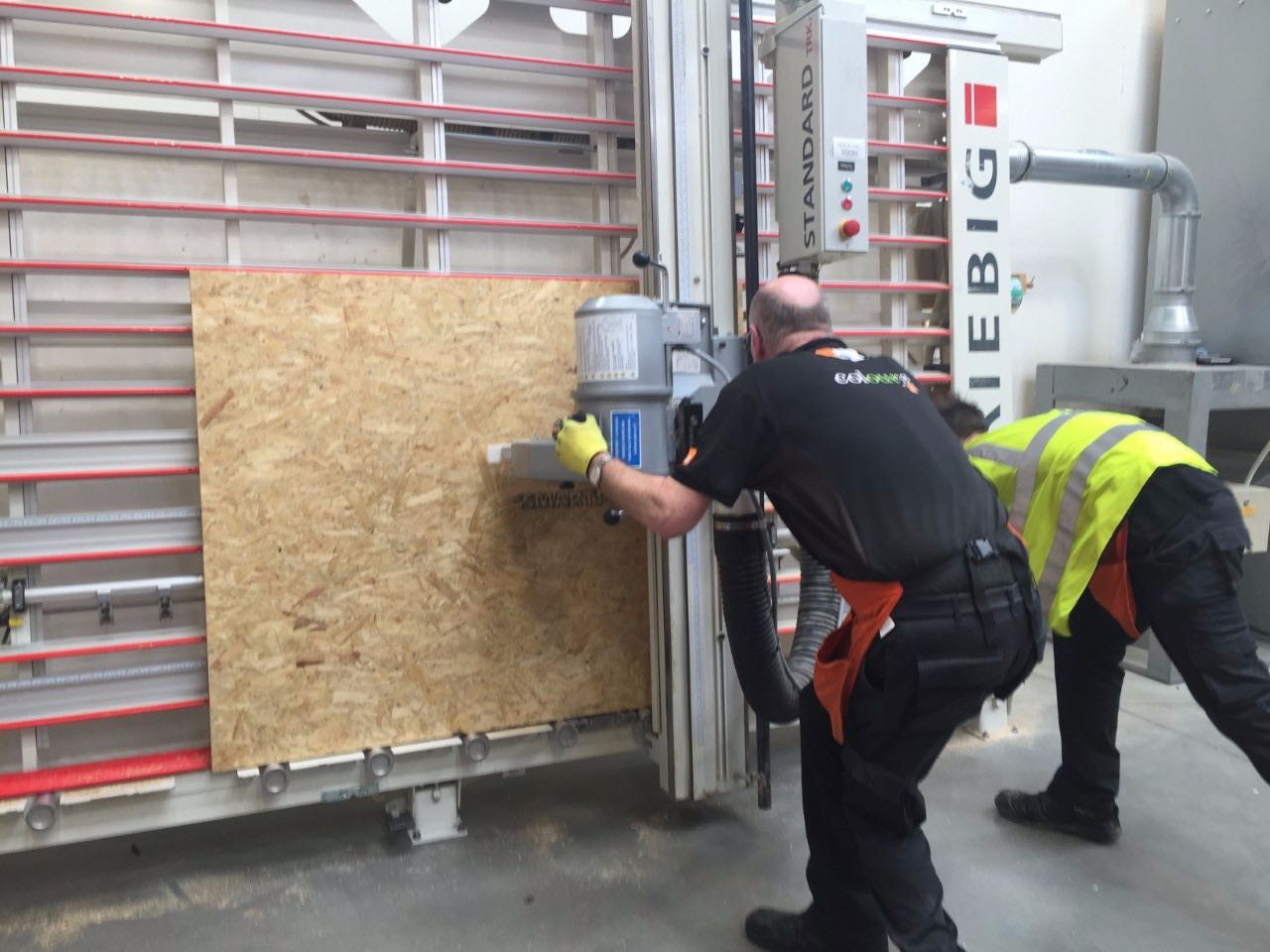
Today I spent my time prepping materials to start the bottle tops mural tomorrow. Starting at B&Q I purchased 2 sheets of 9mm oriented strand board and got them cut to size. I then applied a base coat of a slightly blue tinted white. 


I then gathered all the plastic bottle tops that have been collected from both myself, the university, the students and my family and friends. Sorting through and separating the odd metal ones and larger bottle tops, placing them into a colour coordination. I was very surprised with the amount collected and am hopeful I will have enough to complete it over the Easter holidays. 


Saturday, 13 April 2019

13.04.2019 
As a Greenpeace supporter/donator I received an invite to join in on the weekend of tours at The South Quay docks in London, to have a tour of their ship Esperanza. I was very excited about this opportunity to talk to Greenpeace campaigners myself, and check out the vessel they use for expeditions such as chasing ships with illegal cargo like timber from the amazon, or collecting research on the polar bears in the arctic. From the tour I found out that the ship can spend up to 60 days at sea at a time without docking, and the crew usually spends 3 months on 3 months off. 
At the end of the tour one of the campaigners met us and gave us a run down of where the ship is going next and what the latest campaign is. The ship on Monday is leaving London and making its way to the North Pole. Here it is embarking on a 12 month journey where it will visit desperate parts of our oceans that are in danger in many different ways. This journey will form research and spread the word about 30x30. Greenpeace is currently working towards securing a global ocean treaty that would protect 30% of the worlds oceans by 2030. This is a necessity for the health of our oceans and the animals within it, and a hopeful step for the future. 
It was inspiring to hear about the dedication and work everyone at Greenpeace is achieving or working towards. It has given me a new determination to really use my work within our end of year exhibition, Amalgamation and the artwork for the Students Union, to spread awareness about plastic pollution within our oceans and plant the distressing images of suffering that are the animals reality. 


12.04.2019
I collected the bottle tops the Students Union had collected over the past couple of weeks along with the ones collected from the LRV night and was surprised by the amount! This has made me extremely eager and excited to get started on the mural.


As we decided against resin to keep the piece recyclable and chose to get an image printed instead, it seems a shame to dismantle the work straight after completion. Because of this I thought it would be better to display the piece in our end of year exhibition, Amalgamation. This would give everyone who was involved in collecting and advertising/organising a chance to see the bottle tops in action, making the reveal of the piece all the more exciting. 
So with the idea that the physical mural would be displayed, I will use a MDF board as the base, using a small amount of hot glue to fix the bottle tops to the board. This will be easily picked off so should remain recyclable and I will be able to reuse the wood or offer it up to another student on my course. 

Friday, 12 April 2019

12.04.2019
After really struggling to get replies from anyone involved with the project for the Students Union and with time quickly passing by it felt like nothing was moving on. But once I heard back, we decided to wait for workshops until after Easter and that I would now complete the work from home over our two week break. 
We had discussions over making sure the piece is  recyclable, otherwise we would be adding to the amount of plastic waste and to the problem. So we decided to drop the idea of using resin and thought about producing the mural, photographing it and getting it printed onto weatherproofed foamex instead, a much less permanence material. This will mean the bottle tops can get recycled straight away and the only waste produced from the piece would be the printed foamex. But as it will be printed and reduces the risk of the work getting damaged or weathered, it could even increase the time the work will be up for.
The article promoting the project was uploaded 08.03.2019 including the information and image I produced, which can be found at: 

https://www.staffsunion.com/news/article/staffsunion/Plastic-The-Slow-Tsunami/?fbclid=IwAR1Fhv2EQKqJdBoth0SEcGEKROOlaepRiw5zFXDXmZqEbIkhc3N83_lWfU8

The advertising on social media has also finally been circulating as the Students Union page uploaded an event for LRV's Flashback Friday night, promoting it by revealing if you bring 10 plastic bottle tops before midnight you get free entry! This is exciting as the student nights are normally quite busy, and with it being the last one before Easter holidays, we should get a few more collected!


https://www.facebook.com/events/1198997373595242/

I will be collecting the bottle tops that have been collected throughout the university late this evening and I am excited to get the work started! 


Thursday, 11 April 2019

11.04.2019
For our end of year exhibition this year we are teaming up with Level 4's and having a joint exhibition. Last week we had to present a proposal with 2 desired spaces from the floor plan and were then given a designated room/space. I was unsure about what work I would include and in what way I would present this work, and was given a space I didn't request. This turned out for the best, as the space I was given inspired me with a new idea.
I will use my animal pollution sculptures still but drop the idea of my shop 'PolluShine'. I was originally going to reinvent the shop idea I used in my AirSpace exhibition, by creating a closed space with added elements such as ocean sounds and accompanying brochures etc, but decided that I wanted to test out the sculptures in a completely different way. 
Going back to a more traditional white cube style display, I will place the 'Seal Choker', 'Turtle Nose Stud' and 'Penguin Cape' at varying heights, whilst suspending my 'Seagull Raincoat' sculpture directly above with clear fishing line. The height will be determined by the size of the animal, the 'Seal Choker' will be placed on the tallest plinth 80cm H, the 'Turtle Nose Stud' on the second tallest around 20-30cm H, and the 'Penguin Cape' on the floor in a painted square. The plinths and painted square will be a rich, deep renaissance blue. This is linking back to the environment our pollution is damaging, the homes and lives of these animals, our oceans. The height and levels of the animals with the splash of blue will also relate to their natural interaction with the ocean. Penguins walk as well as swim, turtles swim low to the oceans bed, seals are larger animals in general and seagulls obviously fly. I will then use the fish nets and fishing line I used to create the 'dresses' in my 'PolluShine' shop to create a collage of different types of nets and materials to make one large net. The collage effect will aim to exert worry over just how many/how many different types of ghost nets are caught up and abandoned in our oceans, and give a glimpse of the damage its doing. 


As this is our last exhibition before our final year in our degree, the level 5's are taking most of the planning on. We split evenly into 3 separate groups; marketing, event planning and logistics for install. I chose the marketing team, and since we have already set up an email, Facebook event page and instagram page. One of my team members has created a poster and I created an online invite:  
The name and image was chosen as a team by our whole year and we are beginning to get a few documents together to promote the exhibition as well as we can. I am also in charge of sorting the press release over easter and getting it to the right people!
I'm very excited for the end of year exhibition as everyones work is so different, and with such a large group to exhibit with, it should be a very unique show! 

Tuesday, 2 April 2019

02.04.2019
This semester I have mostly looked at two artists, Mella Shaw and Mark Dion. 
Mella Shaw is a British artist who was featured at the Collect Open, Saatchi Gallery in 2018, and is now currently on a nationwide tour with her work, Harvest. Harvest is an installation in response to the statistic that by 2050, there will be a greater weight of plastic in the oceans than fish. This large scale installation includes hundreds of detailed press moulded and slip cast clay 'plastic' bottles, containers and fish, as Mella aims to search for practical solutions to our desperate situation. 
I took interest to her work as she too is tackling plastic pollution within our oceans through sculpture, but I also found the link to material and context fascinating. Clay is generally heavier compared to light weight plastic, and is natural in contrast to the man-made material. By using a heavier material, she is exaggerating the weight of the situation whilst not adding to the problem by creating more plastic. This is a detail you wouldn't necessarily realise until you researched into the work more. The idea of searching for information within the work intrigues me as it proves the facts are out there if we choose to listen/find them. We have lived off an out of sight out of mind ethic towards plastic and waste for decades, and that level of wilful ignorance needs to change. We all need to be researching and seeing for ourselves the detrimental effects of plastic as a material when it comes in contact with our environment and wildlife. This is a trait I wanted to transfer into my work with using polymer clay and plastic based materials for my sculptures.
It was really helpful to look into Mella's work as she is tackling the same issues and topics within her practice as mine, and is very much a current working artist. This was great to see the journey of her work, where its being displayed and how, and inspiring to see how artwork can impact the way people consider plastic consumption within their household.   


Mark Dion has also been a great influence. He is a conceptual artist widely known for his scientific presentations within his installations. I was looking more specifically into his 1999-2000 work, Landfill. The calculated chaos of the work and how it looks gradually built up from time, gives this sense of a natural accumulation. But natural feels like the wrong word as it's anything but. The mixture of plastic and waste is used as a record, where information collected are the consequences from life itself. The natural record of life should be the birds on branches or surrounding environment, instead of the rubbish we're leaving behind. As Mark has used a closed diorama, the space feels very claustrophobic and triggers an uncomfortable and desperate response. It feels as if you're looking through a window to another world or another reality. I think this creates some distance from our world and this imagined space (which isn't really imagined at all), instead of making the audience feel involved and also consumed. This piece is interesting though as it feels timeless, it could be about the past, present or future, and speaks a general warning about the destruction we're leaving behind, and the unhealthy relationship between humans and our environment. 
Mark Dion has been a great help for researching into successful installations, as I had never made a scene for myself before. He has an art for occupying a space without over filling it or not including enough elements. As his work tends to be based on factual and scientific messages, he translates this information into an immersive and inquisitive experience. Similar to what Mella did with material, Mark is answering most questions but allowing the audience to inquire themselves, what the work is about. Leaving room for exploring is vital to Marks work as its all about finding truth and encouraging change. This is a technique I ultimately used through my staged shop, PolluShine. 


06.10.19 As I received an email from Curatorspace.com that my proposal had been accepted on the morning of Thursday 26th Sept, it only ga...